
October 27, 2026 - PBS News Hour full episode
10/27/2026 | 57m 46sVideo has Closed Captions
October 27, 2026 - PBS News Hour full episode
October 27, 2026 - PBS News Hour full episode
Problems playing video? | Closed Captioning Feedback
Problems playing video? | Closed Captioning Feedback
Major corporate funding for the PBS News Hour is provided by BDO, BNSF, Consumer Cellular, American Cruise Lines, and Raymond James. Funding for the PBS NewsHour Weekend is provided by...
October 27, 2026 - PBS News Hour full episode
10/27/2026 | 57m 46sVideo has Closed Captions
October 27, 2026 - PBS News Hour full episode
Problems playing video? | Closed Captioning Feedback
Where to Watch PBS News Hour
PBS News Hour is available to stream on pbs.org and the PBS app.
Providing Support for PBS.org
Learn Moreabout PBS online sponsorshipAMNA NAWAZ: Good evening.
I'm Amna Nawaz.
GEOFF BENNETT: And I'm Geoff Bennett.
On the "News Hour" tonight: Early projections show no clear winner in Israel's election.
Now the focus turns to negotiations and political dealmaking needed to form a new coalition government.
AMNA NAWAZ: It's one week before Election Day here in the U.S.
and our new poll reveals what Americans think about the president's performance and election integrity.
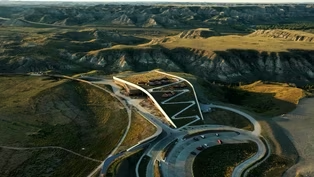
GEOFF BENNETT: And the new Theodore Roosevelt Presidential Library, nestled in North Dakota's Badlands, celebrates the president's conservation legacy with a design that reflects his commitment to the natural world.
CRAIG DYKERS, Co-Founder, Snohetta: We wanted it to feel that it belonged, so that it didn't feel that it was dropped out of the sky.
At the same time, we wanted it to feel fresh and new and different.
(BREAK) GEOFF BENNETT: Welcome to the "News Hour."
Israelis turned out in record numbers for their first election since the October 7 terrorist attacks that launched the war in Gaza.
AMNA NAWAZ: And, according to projections, opposition parties have won more seats in Parliament than the coalition led by Prime Minister Benjamin Netanyahu, potentially setting the stage for a change in government.
Nick Schifrin is live for us in Tel Aviv tonight -- Nick.
NICK SCHIFRIN: Amna, this is the headquarters for Gadi Eisenkot, the leader of the opposition coalition.
His party and his supporters are emphasizing that they, along with the Arab parties, won many more seats than Netanyahu's coalition.
And Netanyahu's coalition lost many seats.
But, Amna, the bottom line is that this coalition does not appear to have a path toward forming a majority government after what many Israelis call one of the country's most consequential elections.
Tonight in Tel Aviv, the party that wants to unseat Israel's longest-serving prime minister says they have a mandate to change the country.
But 40 miles up the road in Jerusalem, Netanyahu's party is saying it won the most votes and there's no path to an opposition government.
There are 120 seats in the Israeli Parliament, which means a coalition needs 61 to form a majority government.
Netanyahu's coalition is estimated to have won 50 seats.
Eisenkot's coalition is estimated to have won more, 53, but not enough to secure a majority.
Arab parties, who are anti-Netanyahu, have an estimated record 17, but it's unlikely that Eisenkot's coalition allies will agree to work with them.
We have been traveling through the country in the lead-up to the election, and there is a widespread perception that this moment is historically fractious and the election existential.
JONATHAN BARSADE, President, America-Israel Democracy Coalition: Doesn't matter what side of the political spectrum you're on.
Israel is at a crossroads.
NICK SCHIFRIN: Jonathan Barsade is a dual American-Israeli citizen and the president of the nonpartisan America-Israel Democracy Coalition.
JONATHAN BARSADE: These elections are going to determine what direction Israel is going to go and how Israel is going to look for the next 40, 50 years.
That's a sentiment everyone -- they feel it.
NICK SCHIFRIN: He's helped lead the largest ever effort to bring Israeli expats back to the country to vote since Israel has no mail-in voting.
Some 70,000 have returned.
Including Ruth Mekel, who's wise enough not to give her age.
She flew here from New York to vote against Netanyahu.
RUTHIE MEKEL, Israeli Voter: These are really critical, critical elections, historic elections, in order to prevent this government from ending the democracy and starting an orthodox religious way of life.
NICK SCHIFRIN: A few miles to the south, voting's a family affair for 3-year-old Michael... AVSHALOM SERI, Rishon LeZion, Israel, Resident: He's a good citizen.
NICK SCHIFRIN: ... who helped his grandfather also vote against Netanyahu; 75-year-old Avshalom Seri says new leadership could bring peace.
AVSHALOM SERI: I hope that we will come with different leaders, leaders that -- thinking for peace.
We have children.
We have grandchildren, and we think about them, the new generation.
We fight so much.
That's enough.
The time for peace.
NICK SCHIFRIN: But Netanyahu and his supporters believe Israel's peace comes from his strength.
WOMAN: This is the work of a genius.
NICK SCHIFRIN: And like a chess player, they argue only he has the strategy to take on Israel's enemies, and only he has the relationship with President Trump to finish the job in Iran.
MAOR VAKNIN, Likud Adviser (through translator): With the help of God, in the next four years, Bibi will continue to do more things with Trump in the two years that Trump has left.
We will solve this problem, which is called Hamas, Hezbollah, Lebanon, Syria, Iran, and then we succeed in cutting off the head of the snake, as Bibi promised.
NICK SCHIFRIN: Forty-four-old Shimi Elias also brought his son Omri to vote.
He usually votes for Netanyahu, but this year voted for Netanyahu ally, right-wing Minister of Finance Bezalel Smotrich.
SHIMI ELIAS, Israeli Voter: The government since the war, I'm happy with what they achieved.
NICK SCHIFRIN: Tonight, those divides remain, and a country hoping for a decisive decision once again faces uncertainty.
AMNA NAWAZ: And Nick is back with us now from Tel Aviv.
So, Nick, without either side winning a majority here, what happens now, and specifically what does that mean for Prime Minister Benjamin Netanyahu?
NICK SCHIFRIN: So, as you know, Amna, there will be a lot of horse-trading over the next few days and the next few weeks and perhaps even the next few months.
Perhaps the most likely outcome from the Eisenkot campaign, or at least the best outcome from them, would be what's known as a minority government.
They would form a government with fewer than 61 seats.
But, as we laid out in the piece, that would require collaborating with the Arab parties.
And inside of Eisenkot's coalition, that's already been rejected.
Now, of course, in Israeli politics, a lot of things can be said before the election, and that changes after the election, but right now there's not a lot of popularity or support for the idea of getting Arab support to create that government.
Now, President Trump and his aides would like to see some kind of unity government, Netanyahu and Eisenkot working together.
Eisenkot and every single one of the leading opposition party, the leading -- the leaders of the opposition parties, have absolutely refused that scenario.
So if there is no minority government, and if there is no unity government, then the perhaps the most likely outcome, Amna, is that political ambiguity, the political uncertainty that I just talked about, which is that Netanyahu stays prime minister, he would be a caretaker prime minister, and that we could even see multiple elections over the next few months, just like we saw five years ago.
And a lot of officials here are worried about that interim time, what Prime Minister Netanyahu might be willing or interested in doing alongside President Trump, especially when it comes to whether they restart the war in Iran, Amna.
AMNA NAWAZ: It's an historic Israeli election.
Nick Schifrin has been on the ground covering it for us all.
That is Nick Schifrin reporting live from Tel Aviv.
Nick, thank you.
NICK SCHIFRIN: Thank you.
AMNA NAWAZ: Just one week until Election Day here in the U.S., and tens of millions of Americans have already cast their ballots.
Now the final push is on.
President Trump is on the campaign trail today, making a swing through Texas, a state Republicans have long counted on, but where Democrats see an opportunity to make gains.
GEOFF BENNETT: And with voters pointing to the cost of everyday necessities, the economy is looming large in the final week of the campaign.
Here's our Lisa Desjardins.
DONALD TRUMP, President of the United States: Seven days from now, the people of Texas are going to defeat Democrat communist James Talafreako.
LISA DESJARDINS: In the Lone Star State, national attention, with President Donald Trump today making his fourth trip there this campaign season.
DONALD TRUMP: You see, it'll happen very quickly.
You will -- it'll be like a blink.
Gasoline and diesel prices will soon come down.
They will come plummeting down for the consumer.
DONALD TRUMP: The only man standing between Texas and this raging lunatic is a man named President Donald J. Trump, thank you.
And I need the help of Ken Paxton in the U.S.
Senate.
LISA DESJARDINS: The president hopes to give state Attorney General Ken Paxton a last-minute boost in a tight race against Democrat James Talarico.
STATE REP.
JAMES TALARICO (D-TX), Senatorial Candidate: El Paso, it is so good to see you!
LISA DESJARDINS: Talarico made his own appeal to voters last night, seeking to turn concerns about the economy and cost of living into support at the ballot box.
STATE REP.
JAMES TALARICO: But corrupt political deals have gutted our health care and sent premiums skyrocketing, all to give tax cuts to billionaires.
We have an affordability crisis because we have a corruption crisis.
But we can end that in this election in this state in this race.
LISA DESJARDINS: Those concerns echoed by some Texans.
SUSAN CAMPOS, Texas Voter: We need to take our government back and we need candidates who support people, not just the top 1 percent, but all of us who struggle every day to pay for gas, to pay for groceries, to pay for basic needs.
LISA DESJARDINS: Gas prices are related to President Trump's war in Iran.
But some voters see things differently, like this one in Mississippi.
LEIGH HOUSE, Mississippi Voter: You know, I can pay a little bit higher gas prices so that my grandchildren can grow up and continue to grow up in a free world.
LISA DESJARDINS: Or this voter in California.
BLAKE MARNELL, California Voter: The main issue still for me and for the country is illegal immigration.
There are a lot of domestic issues, but, for instance, let's take the cost of housing, which is higher than some people would like it.
If there were millions fewer people in our country, the cost of housing would go down.
LISA DESJARDINS: But Democrats are running on the issue everywhere.
Ohio gubernatorial candidate Amy Acton: AMY ACTON (D), Ohio Gubernatorial Candidate: Hope is what drives this campaign.
AMY ACTON: Because, when we're in this together, we can make life better for Ohioans, and that's why we're fighting to make this state affordable again.
REP.
MIKE LAWLER (R-NY): Well, good morning, everybody.
LISA DESJARDINS: What's Republicans' answer?
In New York's 17th Congressional District, vulnerable incumbent Mike Lawler today said it's less government and more bipartisanship.
REP.
MIKE LAWLER: Well, we live in New York.
It's the highest-tax state in the country.
We have the worst business climate.
We lead the nation in out-migration.
We have the most incompetent governor running our state.
And I have stood up to both parties to deliver for my constituents.
LISA DESJARDINS: But, still, some voters in his district question the party in power.
PRIMROSE D. SULLIVAN, New York Voter: I do think that we have issues that are actually making our -- like, our property values are out of control.
So I feel like those issues make me feel like perhaps we might try another option.
LISA DESJARDINS: Meantime, in swing state Michigan, the vice president wants voters to choose the GOP option.
J.D.
VANCE, Vice President of the United States: At its heart, our movement is about returning control of the United States of America to you, which is exactly where it belongs.
LISA DESJARDINS: Campaigning there today for Republicans up and down the ballot.
J.D.
VANCE: We have got to keep building, ladies and gentlemen, and we need good fighters to make it happen.
LISA DESJARDINS: The tight Michigan Senate race between former Congressman and Republican Mike Rogers and Democrat Abdul El-Sayed is one of a half-dozen likely to decide control of the U.S.
Senate.
El-Sayed is Muslim American, born to Egyptian immigrants in the U.S.
At a Grand Rapids event for Rogers last night, Health and Human Services Secretary Robert F. Kennedy Jr.
spoke bluntly and falsely about Arabs.
ROBERT F. KENNEDY JR., U.S.
Health and Human Services Secretary: There's 500 million Arabs in the world.
And yet they don't produce science.
They don't win the Nobel Prize.
They don't win the Field Prize.
They don't win the Wolf Prize.
They don't produce literature.
Oh, and all of that tradition has been destroyed by the Muslim Brotherhood.
They have created stagnant societies that do one, two things hatred and war and victimization.
DONALD TRUMP: You can defeat the Dumocrat communists and vote for more money in your pockets, bigger paychecks for your families, lower taxes.
LISA DESJARDINS: But for the president today, it is all about Texas.
DONALD TRUMP: You must vote Republican.
You must vote for Paxton.
LISA DESJARDINS: A national race with just a few days left.
For the "PBS News Hour," I'm Lisa Desjardins.
GEOFF BENNETT: Let's shift our focus now to a new PBS News/NPR/Marist poll released today.
It shows Democrats holding an eight-point lead among likely voters.
And with independents, that lead grows to 13 points.
Here to break down the poll results and what it all means is Domenico Montanaro of NPR.
It's always great to see you.
DOMENICO MONTANARO, Political Editor, NPR: Great to be here.
GEOFF BENNETT: So, in this final push, Democrats have what appears to be an enthusiasm advantage; 71 percent of Democrats say they are very enthusiastic to vote.
Just 61 percent of Republicans and 48 percent of independents say the same.
So what does that suggest about the state of this race?
DOMENICO MONTANARO: Yes, look, I think, overall, it's a lot of what we have seen, which is that Democrats are probably favored to win the House at this point.
I think it'd be a shock if Democrats didn't pick up the House.
You would have to see a polling error that was bigger than probably anything we have seen in modern polling times.
So, that plus-eight advantage on the generic congressional ballot is really important, because, when you look historically from all of the midterm elections back to the turn of the century, the party with the edge on the congressional ballot has gone on to make gains.
So that's where people think things are headed at this point.
The Senate's a little bit different because you're talking about a place where you have got so many Republican seats, so many red seats where Democrats are going to have to try to win in places where Trump, frankly, won by double digits.
Now, I will say there are a couple caution flags for Democrats in just how big their gains might be, because when you look at pro-Democratic voting groups who say that they're very enthusiastic about voting, when you look at groups that are under 45 years old, younger voters, only 42 percent say that they are very enthusiastic to vote.
Nonwhite voters -- clearly, Democrats need Latinos, Black voters -- only 53 percent saying that they're very enthusiastic.
White women with college degrees, who are one of the highest-propensity voting groups, only 56 percent saying that they are very enthusiastic to vote.
In 2018, white women with college degrees were a little higher than that.
You compare that to pro-Republican groups, groups that give Trump a pretty high approval rating in general, MAGA supporters, white evangelical Christians, white women without college degrees, and you can see there on your screen all higher than those pro-Democratic groups.
Now, we have also seen a political realignment in this country where those college-educated white voters have moved more toward Democrats.
Older voters have also moved more toward Democrats, and older voters, 71 percent in our survey, say that they are very enthusiastic.
I just think that midterm elections are such a volatile stew because you have such lower turnout in these elections; 42 percent on average people turn out to vote of registered voters since 1992.
Compare that to about 60 percent in presidential elections.
So polls are a little tricky in trying to figure out just what the shape of the electorate is going to be.
GEOFF BENNETT: And with President Trump effectively nationalizing so many of these races by telling voters to pretend he's on the ballot, that could be potentially problematic for Republicans because, according to this poll, 40 percent of likely voters approve of the job he's doing as president; 59 percent disapprove.
At the same time, you have got 44 percent of people saying their vote is mostly a vote against President Trump; 21 percent say it's for him.
So what does that say about the Trump effect in all of this?
DOMENICO MONTANARO: Right.
And Trump has told people to pretend that he's on the ballot.
DOMENICO MONTANARO: So, in that 21 percent, if you look at the exit polls from the 2024 presidential election, 55 percent of people said that their vote was a vote for Trump.
So it's not exactly translating to everyone that they're saying that, oh, yes, this is a vote for Trump for the people that need it to be a vote for Trump.
And that's why Trump is out there in these red states, in Texas, in Kansas, trying to rally those troops, trying to get Republicans out to the polls, because Republicans know that if they don't get Republicans out, a wave that could be small with two seats maybe that flip to Democrats, could wind up with six or seven seats that flip to Democrats if you don't have enough Republicans who go out to the polls in places where there are a lot of Republican voters.
So I think that's going to be a huge key in this election when we're watching that turnout.
GEOFF BENNETT: As the president and as his administration takes steps that in many ways undermine confidence in the elections -- you have the DOJ filing this lawsuit in Alaska to stop the count if the Republican there loses, you have got the 20,000 voters or votes in California that they're trying to stop from being counted -- how is that playing with voters?
DOMENICO MONTANARO: Yes, I think, first and foremost we should note that trust in state and local elections is pretty high generally across all political parties.
Even seven in 10 Republicans say that they have trust that the elections will be fair and accurate; 88 percent of Democrats say that the trust is there.
When you look at whether their candidates should accept the results if they lose, seven in 10 Republicans, nine in 10 Democrats say that.
Now, there's a 20-point gap, you might notice, right?
And that means that, if we're stuck waiting for election results -- and, remember, when we go to bed, or when other people go to bed on election night, there are going... GEOFF BENNETT: Normal people.
DOMENICO MONTANARO: There are going to be a lot of election results left on the table.
DOMENICO MONTANARO: One of those places is Alaska.
Alaska was the last place to be reporting their election results in 2024.
It takes a very long time.
We could be waiting three weeks if the race is really close there.
And that could mean we're waiting for the Senate to be decided based on Alaska.
We know that the Justice Department is already looking to file a lawsuit about trying to mitigate what could be a Democratic win there because you have two people named Dan Sullivan on the ballot, something that's already been litigated in the state of Alaska by the Alaska Supreme Court.
But there's going to be room for misinformation clearly, when you have a quarter of Republicans saying that I don't know that my candidate should accept the results of the election, I think they should probably or definitely contest those.
So I think that we are -- I hope it doesn't happen, but it's there's the possibility that we're in for a lot of really complicated things that happen, a lot of misinformation that we're going to have to try to sift through and make clear for people.
GEOFF BENNETT: Domenico Montanaro of NPR, always great to speak with you.
DOMENICO MONTANARO: You're welcome.
Thank you.
GEOFF BENNETT: We start today's other headlines with an update from Brazil.
The U.S.
State Department says it will provide U.S.
visas to Flavio Bolsonaro and his family following his loss in Sunday's run-off election.
Multiple outlets are reporting that he's already left Brazil for the U.S.
The news comes a day after police ordered Bolsonaro to hand over his passport as part of a money laundering investigation.
He's denied any wrongdoing.
Yesterday, his party acknowledged the victory of incumbent president Luiz Inacio Lula da Silva.
But Bolsonaro himself has yet to formally concede.
President Trump has said without evidence that the election there was rigged.
In Washington, D.C., President Trump insists the East Potomac Golf Course will close next month for renovations, despite a federal judge's order temporarily blocking major changes to the property.
Last night, Judge Ana Reyes extended that order after hundreds of trees had already been cut down.
In her 70-page opinion, she also blasted government lawyers for misrepresenting Mr.
Trump's plans, writing that -- quote -- "Rarely, if ever, has the United States Department of Justice urged a federal court not to believe the sitting president."
The president responded by saying that the judge has -- quote -- "absolutely no right" to hold up his plans to make the site what he calls a championship-level course.
President Trump says his administration will appeal the ruling.
The Trump administration has demanded that Washington state election officials set aside ballots from some 400 voters that it says could be noncitizens.
NEIL FLOYD, Acting U.S.
Attorney, Western District of Washington: These are people that are registered to vote, have voted, and are not citizens.
GEOFF BENNETT: The Justice Department said the people identified represent just the tip of the iceberg, even though evidence shows noncitizen voting is exceedingly rare.
Washington's secretary of state said he was reviewing the DOJ's request.
This is the third time this month that the Trump administration has tried to involve itself in ballot counting and certification following a similar effort in California and a separate legal challenge in Alaska.
The accounting and certification of votes are responsibilities assigned to state and local election officials under state and federal law.
A federal judge dismissed new obstruction charges today against two former FBI officials for their roles in investigations into Hunter Biden.
In a court hearing today, the judge scolded Justice Department lawyers for adding the charges overnight without a judge's sign-off.
Nikki Flores and Bradley Benavides are still charged with lying to Congress during 2023 testimony, allegedly playing down their knowledge about a laptop belonging to former President Biden's son.
Their lawyers have slammed the charges, blaming prosecutors for what they called outrageous government conduct.
In Ukraine, officials say a cease-fire in the Russian-occupied city of Oleshky was holding today as a humanitarian truce took effect.
Some 2,000 residents are holed up there with limited food and medicine.
Aid is expected to arrive later in the week.
The White House has said that first lady Melania Trump brokered the cease-fire, and Pope Leo has also called for a halt in fighting.
Residents of Oleshky are blocked from evacuating by drones and land mines.
And that has some of their fellow Ukrainians grateful for today's truce, but worried about what happens next.
NATALIIA BONDAR, Kyiv, Ukraine, Resident (through translator): There is hope, because I believe in the best case scenario and that people will be evacuated from Oleshky.
But the question is, in which direction?
I would want it to be toward Ukraine.
But as far as I know, our side is mined.
So I feel very sorry for the people.
GEOFF BENNETT: Also today, Norway's prime minister and Finland's president held their first known call with Russian President Vladimir Putin since the start of the war, calling it frank and substantive.
Despite the efforts at diplomacy, the violence on the ground continues.
Ukraine says that Russia struck the capital, Kyiv, with missiles overnight, killing at least one person and injuring more than a dozen others.
Investigators in Utah announced today that the serial killer Ted Bundy was responsible for a teenage girl's murder in that state back in 1974.
The cold case breakthrough comes 52 years after the body of 17-year-old Melissa Ann Smith was found in the woods by a hunter.
Bundy himself died in 1989, but the count of his confirmed victims continues to grow, and that's due to advances in DNA testing.
On Wall Street today, stocks edged higher as AI stocks rebounded after some recent losses.
The Dow Jones industrial average added nearly 16 points, so roughly flat.
The Nasdaq jumped more than 1 percent.
The S&P 500 also posted a solid gain.
And actress Susan Saint James has died.
She won an Emmy in 1969 for her role in "The Name of the Game" and co-starred with Rock Hudson in the 1970s crime series "McMillan & Wife."
Then, in the 1980s, she starred in "Kate & Allie," a sitcom about two divorced mothers.
SUSAN SAINT JAMES, Actress: But life doesn't always give you the whole pie.
Sometimes it just gives you a slice.
SUSAN SAINT JAMES: And the thing is to eat the slice you have with relish.
JANE CURTIN: Pie with relish.
Are you pregnant?
GEOFF BENNETT: Saint James portrayed the free-spirited Kate, who moves in with the straight-laced Allie, played by Jane Curtin.
Outside of acting, Saint James was a longtime supporter of the Special Olympics and served on its board of directors.
Susan Saint James died yesterday after being diagnosed with pancreatic cancer.
She was 80 years old.
Still to come on the "News Hour": we report from Georgia on election security preparations in the shadow of Republican scrutiny; how President Trump's coalition of evangelical voters could be fraying ahead of the midterms; And a school principal documents Indonesia's worst wildfires in over a decade.
AMNA NAWAZ: The Trump administration has stepped up efforts to challenge the integrity of U.S.
elections and assert greater control over how they're conducted.
Georgia has been at the center of that debate ever since President Trump's false claims about the state's role in the 2020 election.
In partnership with the Pulitzer Center, Liz Landers looks at how Georgia election officials are working to restore public confidence in the voting process.
LIZ LANDERS: In a small warehouse in Paulding, Georgia, about an hour West of Atlanta, workers are unpacking voting machines and running tests for logic and accuracy, part of a protocol taking place statewide as Georgia prepares for the midterm elections next month.
This is the Paulding County election headquarters.
Everything here is meticulously organized to send out to all of their polling locations, including these ballot scanners.
These are from Dominion Voting Systems, and each of these is secured and locked in six different places to ensure that there is no tampering with this election equipment.
After the 2020 election spawned conspiracies about procedures and vote totals, Georgia election officials began inviting the press and public into their election offices to observe the checks and balances in action.
WOMAN: So, once we get all the selections, we will print our ballot.
Like I said, we do this for every single race, every single candidate, every single piece of equipment, and every single ballot.
LIZ LANDERS: Lacy Dunn is the assistant elections director in Paulding County.
LACY DUNN, Assistant Elections Director, Paulding County, Georgia: We know that Georgia's -- it's in the news.
And so we are very prepared.
LIZ LANDERS: Overseeing it all is Brad Raffensperger, Georgia's Republican secretary of state for the past eight years.
How much contact do you have with the local election officials here in Georgia?
BRAD RAFFENSPERGER (R), Georgia Secretary of State: Our team has daily contact.
We have 159 counties.
It gets down to training and then also oversight, and then just really having those constant communications.
LIZ LANDERS: He became a household name for refusing to help Donald Trump overturn the 2020 election result in Georgia.
DONALD TRUMP, President of the United States: So, look, all I want to do is this.
I just want to find 11,780 votes, which is one more than we have, because we won the state.
LIZ LANDERS: In January of this year, FBI agents raided the Fulton County election headquarters, seizing hundreds of boxes of 2020 election material.
The director of national intelligence was even present.
DONALD TRUMP: They have the ballots.
FBI came in and raided.
They found plenty of stuff, and now they have the ballots.
LIZ LANDERS: Almost nine months after that unprecedented seizure of election material, the FBI has yet to bring charges.
But President Trump has long seen Georgia as central to his false claim that the 2020 election was stolen, which has created doubt in some voters' minds here.
MAN: Do I think there may have been some issue in 2020?
Absolutely.
You know, I think about the 2020 election, which I really think was rigged.
MAN: I'm going to be optimistic, and I'm going to feel like this time around my vote will be counted.
LIZ LANDERS: Now, in the last election that he will oversee, Raffensperger is pushing back on the Trump administration's ongoing efforts to take more control of the election process.
Georgia, like 30 other states, refused to turn over sensitive voter information to the Department of Justice.
BRAD RAFFENSPERGER: I provided the federal authorities everything we could by state law.
And state law says you cannot hand out the information that they wanted.
What they wanted was Social Security numbers, date of birth, full date of birth.
And that is PII, your personal identifying information.
And that's just something by state law we were not allowed to do.
And so we -- that was where we placed the guardrail on that.
LIZ LANDERS: Georgia already requires voter I.D., and Raffensperger touts a recent audit of the voter rolls in that state that found it was 99.8 percent accurate.
You don't have problems with widespread noncitizens on the voter rolls here.
BRAD RAFFENSPERGER: Yes.
We have been diligent for years.
We understand how that's a real hot button for all voters, both political sides.
So we check it.
We verify it.
We do the hard work up front.
LIZ LANDERS: That's something that the president has been pushing a lot, that there are allegedly all these noncitizens voting throughout the United States.
What's your message to him on that?
BRAD RAFFENSPERGER: Well, my message is to everyone every state should be doing citizenship audits.
Everyone should be working as hard as we do.
LIZ LANDERS: But it hasn't all gone smoothly for Georgia.
SALLEIGH GRUBBS, Georgia State Election Board: What I'm telling you is, the public deserves better than this.
LIZ LANDERS: The secretary of state's office has clashed in recent years with the Georgia State Election Board, which has limited power, but a loud microphone.
Salleigh Grubbs, the former chair of the Cobb County Republican Party, was appointed to the board late last year by the Republican lieutenant governor.
She still has questions about neighboring Fulton County's role in the 2020 election.
SALLEIGH GRUBBS: Clearly, in Fulton County, there was double counting, sometimes I believe triple counting in Fulton County during the 2020 election.
LIZ LANDERS: How do you know that?
SALLEIGH GRUBBS: Well, they admitted it.
They admitted it in a State Election Board meeting.
So there's really no question that it happened.
It's just, I believe, a question of to what extent.
LIZ LANDERS: When they said that, didn't they say that it was an error that they had double or triple counted?
SALLEIGH GRUBBS: I mean, does it really matter whether it was an error or not?
LIZ LANDERS: While a state investigation of Fulton County's 2020 results did find some double counting of ballots during a recount, the review said that this was due to human error, not intentional misconduct, and said the errors were not enough to alter any election results.
SALLEIGH GRUBBS: We have a secretary of state who has not done his job to secure our election system.
LIZ LANDERS: The latest flash point between the board and the secretary's office, the state's touch screen machines made by Dominion Voting Systems, which print voters' selections on paper ballots with Q.R.
codes that are scanned by tabulators.
The board wants Georgia to help the Justice Department investigate the machines.
SALLEIGH GRUBBS: It's the equipment that's not trustworthy.
I mean, we are voting on equipment that has been compromised.
That system has been distributed across the country.
LIZ LANDERS: You mean the Dominion Voting System?
SALLEIGH GRUBBS: The Dominion Voting System.
The question is how to mitigate those vulnerabilities.
And I don't believe that those things are happening.
LIZ LANDERS: Raffensperger's office says the machines are secure and election officials have processes to ensure ballot secrecy.
Georgia plans to replace the aging Dominion machines by 2028.
In a statement to "News Hour," Dominion Voting Systems, now known as Liberty Vote, said in part -- quote -- "Years of scrutiny have consistently affirmed the accuracy, security and reliability of our voting systems."
Grubbs is also concerned about noncitizens voting despite the very few instances of noncitizens on voter rolls out of the state's nearly eight million registered voters.
How much time and energy should the federal government and the local government be spending on this when it won't actually change the outcome of elections here?
SALLEIGH GRUBBS: The problem is, is that we have a lot of races that are decided by one vote.
And if I vote legally and you vote illegally, and you're not a citizen, you have disenfranchised my vote.
You have suppressed my vote.
Am I for federalization of elections?
Absolutely not.
Am I for the federal government stepping in?
I am for the states doing a good job at administering elections.
I am for the states being transparent.
LIZ LANDERS: Despite her concerns, Grubbs says she will accept the results of next month's election.
SALLEIGH GRUBBS: I accept all the election results, but that's where having verified elections is so important.
If there's an issue, it needs to be investigated.
LIZ LANDERS: And that is one thing she and Brad Raffensperger can agree on.
Raffensperger wants his office to project timeliness and accuracy so that all Georgians are confident in the election results.
For the "PBS News Hour," I'm Liz Landers in Paulding County, Georgia.
GEOFF BENNETT: White evangelical Christians have been among President Trump's most loyal supporters for more than a decade now.
And while our new PBS News/NPR/Marist poll shows that most still approve of the president, there are signs that support may be slipping as the midterms approach.
Here's Stephanie Sy.
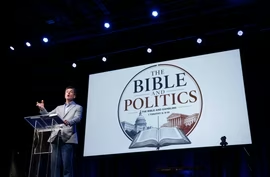
STEPHANIE SY: On a Wednesday night at Village Church in Blythewood, South Carolina, Pastor Erik Estep is preaching from his pre-midterm election sermon, the Bible and politics.
PASTOR ERIK ESTEP, Village Church: I believe the church is the bulwark of truth for our nation.
And it will take people like you and churches like this church to protect this nation spiritually and morally.
STEPHANIE SY: White evangelical Christians have been the bedrock of Donald Trump's support for more than a decade, and they largely still are.
In the latest PBS News/NPR/Marist poll, 66 percent say they approve of the job Trump is doing as president, 26 points higher than the number of Americans overall who say the same.
As Trump rallies his base ahead of the midterm elections, nearly three-quarters of white evangelicals also plan to back Republicans for Congress.
For Trump, it's a bond that once seemed unlikely.
In 2016, candidate Trump rocketed to the top of the Republican primary, a thrice-married New York real estate mogul caught on tape bragging about groping women and accused of relationships with more than one porn star.
DONALD TRUMP, President of the United States: I stand before you today to fulfill one of my highest and most important duties under the United States Constitution, the nomination of a Supreme Court justice.
STEPHANIE SY: But, as president, he accomplished what has long driven many Christians at the polls, his appointment of three conservative Supreme Court justices, which led to the historic overturning of Roe v. Wade and a rollback of abortion protections for millions of American women.
Estep acknowledges his congregants don't all vote alike, but making abortion illegal is one issue where they are mostly aligned.
PASTOR ERIK ESTEP: To vote according to what our faith prescribes us to vote.
Some people have different perspectives, but there's not much of a different perspective when it comes to issues of abortion and life.
I think the Bible's pretty clear.
STEPHANIE SY: But even among evangelicals, Trump's support has slipped, reflecting an overall fraying of his coalition.
His approval rating among those that voted for him has dropped 12 points since the start of his second term.
That falloff is particularly steep among Latinos and young voters in other recent polling.
Even at Village Church in South Carolina, some are wavering.
CYNTHIA CARROLL, South Carolina Voter: I was a Republican.
I voted Donald Trump into -- as president.
And now I'm more on the fence between conservative and a Democrat.
STEPHANIE SY: Until recently, that loyalty had survived some striking moments, like when conservative Charlie Kirk was assassinated last year and his widow, Erika, chose to forgive his killer.
ERIKA KIRK, CEO, Turning Point USA: I forgive him because it was what Christ did and is what Charlie would do.
STEPHANIE SY: President Trump took a different stance.
DONALD TRUMP: That's where I disagreed with Charlie.
I hate my opponent.
STEPHANIE SY: And this spring, the president posted an AI image of himself appearing as a Christ-like healer.
DONALD TRUMP: I did post it.
STEPHANIE SY: After Christian leaders labeled it blasphemous, Trump deleted it, explaining he thought the image portrayed him as a doctor, which he also is not.
ROBERT JONES, CEO, Public Religion Research Institute: I think part of it is really about a vision of the country that he has promised them.
STEPHANIE SY: Robert Jones, president of the Public Religion Research Institute, says the evangelical support Trump does still enjoy is rooted in a certain vision of America.
ROBERT JONES: The message is, we're a white Christian country.
We're losing that identity.
But if you stick with me, I'm going to make sure that we keep that identity.
STEPHANIE SY: But voters who identify as Christian may have more options this election.
Christian faith leaders are running for the Senate as Democrats in Kansas and Texas.
In reliably red South Carolina, where the Senate race is unusually tight.
Republicans are trying to energize evangelical support for Darline Graham by focusing on transgender issues.
DONALD TRUMP: The Democrat who Darline is running to defeat is a far left political hack who supports transgender for everybody and believes in telling confused children they're trapped in the wrong body.
STEPHANIE SY: During a recent campaign rally in the state, Trump painted Democrats as enemies of conservative values.
ROBERT JONES: So when you have, like, that willingness to like literally demonize your political opponents, and then you have got a group that has been attached to you by party and religion, it sets up a kind of toxic environment.
STEPHANIE SY: For his part, Pastor Erik Estep does not endorse specific candidates or a party in his sermon.
PASTOR ERIK ESTEP: We think that it falls on pastors.
If you want people to respond and to get out and to be to be heard, well, there has to be some sort of motivation.
STEPHANIE SY: What motivates his congregants this year may well be critical on Election Day.
For the "PBS News Hour," I'm Stephanie Sy.
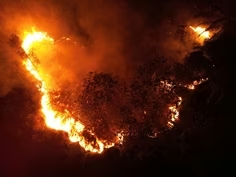
AMNA NAWAZ: Indonesia is battling its worst wildfires in more than a decade, made worse by El Nino weather patterns.
Many of these fires were deliberately set to clear land for farming, including palm oil plantations.
Rain this week brought some relief, but the rainy season isn't expected until next month.
More than 12,000 schools across Indonesia have closed because of the toxic haze, which has also spread to neighboring countries.
In Central Kalimantan, where children have been out of class for weeks, one school principal and photographer has been documenting the fires on social media.
He spoke to us from an empty classroom at the Golden Christian Middle School.
NATANAEL UNDAS, Photographer: My name is Natanael Undas.
I'm a school principal Palangkaraya, Central Kalimantan.
It is a kind of rain forest and then a lot of native trees.
We got a lot of fruits.
We got a lot of tree for timber.
But now the sky, it turns yellow.
It turns like hell.
The last time I saw the blue sky was in August '20.
The haze come to our city.
And then the fire goes closer, closer, closer and closer.
And then, like the last week, it was a really huge fire in the city.
I'm really sad, because my student lost a lot of school hour and learning experience.
If you go outside in a school hour, probably at 8:00, 9:00 a.m.
in the morning, they go outside, they play with other friends without a mask and thinking it's just like a school holiday in the middle of yellow sky.
This fire is not natural disaster at all.
It is manmade disaster.
We're hoping the rain will come soon.
Last night, there was a huge rain, even only for 17 to 25 minutes.
We're longing to inhale the smell of rain, the smell of air, the smell of wet leaves, the smell of wet land.
Last night, when it was raining, I open a little bit of my door, and I try to smell the rain.
It's like a smelling the perfume that's mixed with smoke.
It's still poisoned, so I need to close it.
Not many people knows about what really happening right now, what we are experiencing, especially what we are inhaling.
A lot of children are suffering because of respiratory issue.
I don't want my daughter having the same experience.
I don't want to lose this generation.
We still can save this.
GEOFF BENNETT: Finally tonight, a birthday salute to Theodore Roosevelt.
The nation's 26th president one of its most consequential was born on this day back in 1858.
And, this year, his legacy received a remarkable new tribute, the opening of the Theodore Roosevelt Presidential Library in the Badlands of North Dakota, a landscape that helped shape his lifelong commitment to conservation.
Our senior arts correspondent, Jeffrey Brown, paid a visit for our arts and culture series, Canvas.
JEFFREY BROWN: It's a spectacular setting nestled in the rugged Badlands of Western North Dakota, a breathtaking tribute to the life and legacy of Theodore Roosevelt.
It's a landscape that deeply impacted T.R., who once said he'd never have become president if not for his time here.
And it continues to inspire and move people today.
CRAIG DYKERS, Co-Founder, Snohetta: We wanted it to feel that it belonged, so that it didn't feel that it just dropped out of the sky.
CRAIG DYKERS: At the same time, we wanted it to feel fresh and new and different from anything anybody had seen before.
JEFFREY BROWN: Craig Dykers, co-founder of the international architecture firm Snohetta, helped design the new 93,000-square-foot Theodore Roosevelt Presidential Library.
CRAIG DYKERS: There's a sensation of what the landscape means that you learn when you move through it.
JEFFREY BROWN: After settling on this remote location, Dykers camped alone for 12 days in the Badlands searching for inspiration.
CRAIG DYKERS: In the wilderness here, the more you go into it, the more you're able to experience what he called lonesome freedom, or lonely freedom.
And that's an interesting idea, that you're alone, but you feel free.
Normally, we think of being alone as a scary thing, especially in a place that's wild.
JEFFREY BROWN: Beautiful, but potentially very scary out there, right, if you're alone.
CRAIG DYKERS: Yes, if you're alone, but, at a certain point, you and the context around you become one.
JEFFREY BROWN: The son of wealthy and prominent New Yorkers, Teddy Roosevelt first came to the small town of Medora to hunt bison in 1883.
He returned the following year as a heartbroken 25-year-old after writing in his diary: "The light has gone out of my life."
EDWARD O'KEEFE, Author: Theodore Roosevelt came to North Dakota at a time of incredible stress and distress in his life.
He had lost his wife and his mother on the same day of different causes in the same house.
He healed and he recovered in the Badlands of North Dakota.
JEFFREY BROWN: Edward O'Keefe is the CEO of the Theodore Roosevelt Presidential Library Foundation, a nonprofit that raised more than $500 million to complete the project.
O'Keefe, author of a biography of T.R.
and who now leads public broadcasting's WNET Group in New York City, says Roosevelt's time in North Dakota would shape the rest of his life.
EDWARD O'KEEFE: He found resilience in nature.
He mourned, and he was depressed when he was in Dakota.
And he finally got to live that life that he'd only read about in books.
Theodore Roosevelt felt that North Dakota saved his life.
JEFFREY BROWN: So far, large crowds have poured in since the library opened July 4, offering visitors a chance to learn about a president who left an indelible, if complicated, impression on American life.
A champion of conservation and protector of public lands, Roosevelt was also a champion of military might and expansion abroad.
EDWARD O'KEEFE: Theodore Roosevelt is like a Rorschach test.
What you see in him says more about you than it does about him.
Republicans, Democrats, independents, everyone loves T.R., right?
That's the beauty of Theodore Roosevelt.
He brings people together.
JEFFREY BROWN: And while it's a presidential library in name only, Roosevelt's personal papers are mostly scattered elsewhere, some of his most famous speeches light up the walls, and visitors can see photos and artifacts from every part of his life, from his student days at Harvard, to a hat and single-action Colt revolver from his time as a New York City police commissioner.
EDWARD O'KEEFE: Theodore Roosevelt later said, it's better to wear out than to rust out.
And he did it every day of his life.
He lived only to 60 years old, and those were very, very packed 60 years.
JEFFREY BROWN: Other highlights include his custom-tailored Rough Rider uniform worn during the Spanish-American war.
AI ACTOR: I wanted every guest to feel the worth of their talents.
JEFFREY BROWN: And there's even an AI hologram of Roosevelt designed by Microsoft that takes questions.
Mr.
President, what do you hope people visiting your library take away from it?
AI ACTOR: I hope visitors leave knowing a single thing.
We have power to protect wild places just as I did.
EDWARD O'KEEFE: Theodore Roosevelt wrote a letter in 1918, a year before he died.
He said: "If I could keep one memory of my entire life, it would be my experiences as a rancher and a cowboy in Dakota."
JEFFREY BROWN: Using heavy timber, rammed earth walls, and many materials native to the region, Dyker says the library was designed to give visitors a chance to reflect, all while taking in the surrounding natural beauty, from a walkable roof above, to rocking chairs below.
CRAIG DYKERS: If you look at the shape, it has a shape that's characteristic of the low-lying Badlands in the distance.
It's not the same, but it has the feeling of something you might find out here.
NARRATOR: Here we have a group of beings who are not able to protect themselves.
JEFFREY BROWN: The library also uses educational videos like this one to address some of Roosevelt's troubling legacies.
WOMAN: He believed in the social Darwinism of that time.
JEFFREY BROWN: His belief that whites were a superior race.
MAN: We have to remember that these efforts to eradicate Native American cultures... JEFFREY BROWN: His views on Native Americans.
MAN: Removing their language, removing their religion, removing their cultural practices in the name of -- quote, unquote -- "assimilation," Theodore Roosevelt saw this all as a good thing.
CANDACE STOCK, Chef, Theodore Roosevelt Presidential Library: We can acknowledge the truth.
But how we move forward in this, we want partnership.
JEFFREY BROWN: Candace Stock, the library's head chef, is a Native American who grew up on the White Earth Reservation in Minnesota.
Her way into thinking about the library and the legacy, through food.
CANDACE STOCK: We have a great opportunity to share our culture here.
And maybe some of the uncomfortable truths, we heal with a good meal.
This land is as Native land.
It's holy land.
And so for him to come here and heal from his past traumas, that is how I process pain.
I go out and I forage.
I connect with the land.
MAN: Small towns like Medora are the very fabric of this nation.
JEFFREY BROWN: This area was already heavily reliant on T.R.-inspired tourism.
The "Medora Musical," a song and dance extravaganza on the history of the region, has long been a summer mainstay on a stage just a few miles from the entrance to Theodore Roosevelt National Park.
TRENT TABER, Actor: "Medora" itself wouldn't exist without Teddy Roosevelt.
JEFFREY BROWN: New York-based actor Trent Taber, great mustache and all, has played the part of Teddy Roosevelt for three years.
TRENT TABER: We have had over 1,000 people here every night, some massive crowds, and it absolutely has to do with the library.
JEFFREY BROWN: Roosevelt returned often to North Dakota for the rest of his life.
Now, with the new library, the story goes on.
CRAIG DYKERS: He was the bridge between where the country began and where we are now, right in that spot.
And he understood the future.
He understood where we are today.
He understood all of the politics that are happening now, all of the challenges that are happening with our national resources.
And he dedicated his life to looking to that future.
And so we're still living with his legacy.
JEFFREY BROWN: For the "PBS News Hour," I'm Jeffrey Brown in Medora, North Dakota.
AMNA NAWAZ: And a news update before we go.
A federal grand jury has reportedly declined to indict former White House aide Cassidy Hutchinson.
That's according to multiple media outlets and was first reported by The Washington Post.
The Justice Department wanted to charge Hutchinson for her congressional testimony about President Trump's actions during the January 6 attack on the Capitol.
The DOJ's failure to secure an indictment marks the latest legal pushback against efforts to punish President Trump's perceived enemies.
GEOFF BENNETT: Meantime, there's a lot more online, including a guide to the key ballot measures at play this Election Day.
That's at PBS.org/NewsHour.
AMNA NAWAZ: And we hope that you will join us for live coverage of election results exactly one week from today.
That's right here on PBS next Tuesday, November 3, starting at 7:00 p.m.
Eastern.
And that is the "News Hour" for tonight.
I'm Amna Nawaz.
GEOFF BENNETT: And I'm Geoff Bennett.
For all of us here at the "News Hour," thanks for spending part of your evening with us.
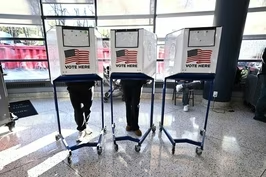 New
Democrats put affordability at center of final campaign push
Video has Closed Captions
Democrats put economy and affordability at center of final campaign push (5m 27s)
 New
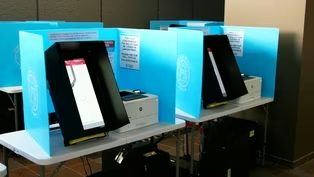
Inside Georgia's push to rebuild trust in elections
Video has Closed Captions
Inside Georgia's push to rebuild trust in elections after Trump's false claims (8m 7s)
 New
News Wrap: U.S. providing visa to Bolsonaro and family
Video has Closed Captions
News Wrap: U.S. providing visas to Bolsonaro and family after loss in Brazil's election (6m 7s)
 New
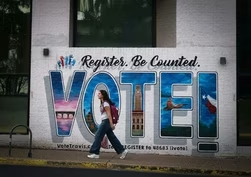
Poll gauges voter enthusiasm for both parties in midterms
Video has Closed Captions
Poll gauges voter enthusiasm for both parties a week before election (6m 17s)
 New
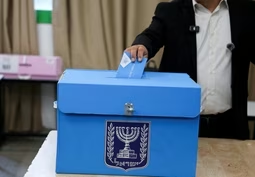
Projections show no clear winner in Israel's election
Video has Closed Captions
Projections show no clear winner in Israel's election (7m 11s)
 New
School principal documents Indonesian wildfires
Video has Closed Captions
School principal documents Indonesia's worst wildfires in a decade (3m 16s)
 New
Theodore Roosevelt library honors his conservation efforts
Video has Closed Captions
Theodore Roosevelt Presidential Library celebrates his commitment to conservation (7m 47s)
 New
Why Trump's coalition of evangelical voters could be fraying
Video has Closed Captions
Why Trump's coalition of evangelical voters could be fraying (6m 5s)
Providing Support for PBS.org
Learn Moreabout PBS online sponsorship
- News and Public Affairs

FRONTLINE is investigative journalism that questions, explains and changes our world.
 New Episode
- News and Public Affairs

Today's top journalists discuss Washington's current political events and public affairs.
 New Episode
 New Episode
 New Episode
 New Episode

 New Episode


 New Episode



Support for PBS provided by:
Major corporate funding for the PBS News Hour is provided by BDO, BNSF, Consumer Cellular, American Cruise Lines, and Raymond James. Funding for the PBS NewsHour Weekend is provided by...