
Official Trailer
Preview: Season 1 | 2m 4s
See how the mixing of prehistoric human genes led the way for our species to thrive.
See how the mixing of prehistoric human genes led the way for our species to survive and thrive around the globe. Archaeology, genetics and anthropology cast new light on 200,000 years of history, detailing how early humans became dominant.
Problems playing video? | Closed Captioning Feedback
Problems playing video? | Closed Captioning Feedback
Official Trailer
Preview: Season 1 | 2m 4s
See how the mixing of prehistoric human genes led the way for our species to survive and thrive around the globe. Archaeology, genetics and anthropology cast new light on 200,000 years of history, detailing how early humans became dominant.
Problems playing video? | Closed Captioning Feedback
How to Watch First Peoples
First Peoples is available to stream on pbs.org and the free PBS App, available on iPhone, Apple TV, Android TV, Android smartphones, Amazon Fire TV, Amazon Fire Tablet, Roku, Samsung Smart TV, and Vizio.
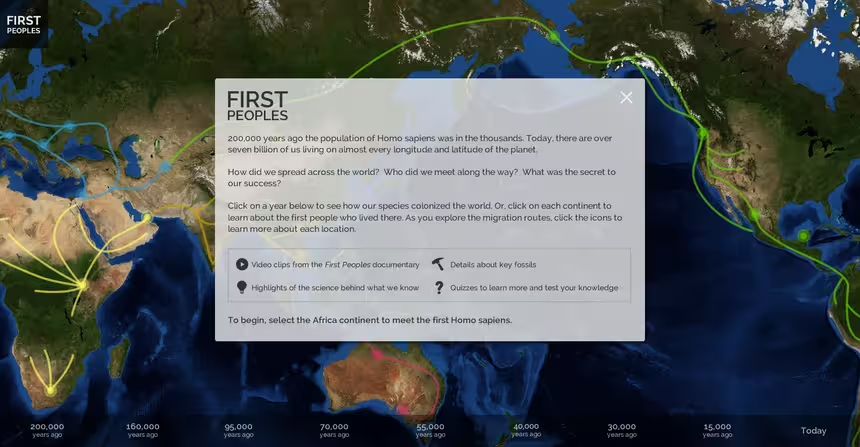
Classroom Resources
How did Homo sapiens populate the Earth? This interactive map highlights recent dramatic advancements in our understanding of early human history. Grades: 6-12Providing Support for PBS.org
Learn Moreabout PBS online sponsorship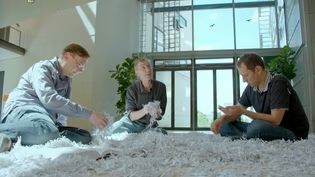
Clip: S1 | 2m 34s | Scientists demonstrate the challenges in reconstructing DNA from a Neanderthal bone. (2m 34s)
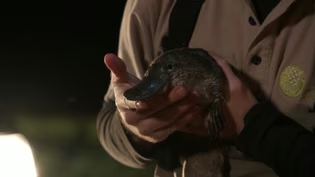
The Dangers of Genetic Isolation
Clip: S1 | 2m 5s | Witness the dangers of genetic isolation exemplified by the duck-billed platypus. (2m 5s)
 Now Playing
Preview: S1 | 2m 4s | See how the mixing of prehistoric human genes led the way for our species to thrive. (2m 4s)
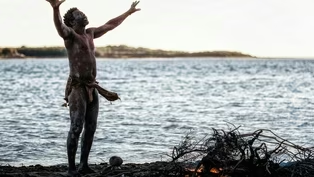
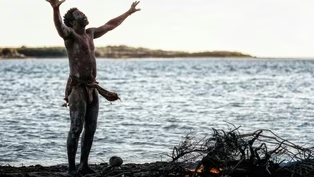
Preview: Ep4 | 30s | Learn how Homo sapiens, new in Australia and truly alone, managed to survive and flourish. (30s)
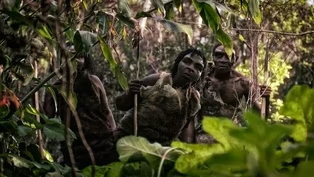
Preview: Ep3 | 30s | Discover a type of ancient human whose genes helped us face down extinction. (30s)
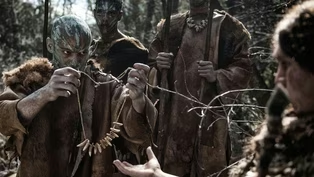
Preview: Ep5 | 30s | Find out why Neanderthals, with whom early humans in Europe interbred, went extinct. (30s)
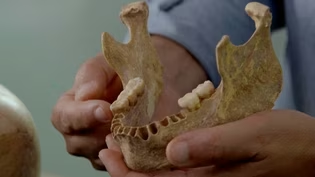
Clip: Ep5 | 1m 28s | When Homo sapiens turned up in prehistoric Europe, they ran into the Neanderthals. (1m 28s)
Clip: Ep5 | 2m 14s | Archaeologists uncover a modern human in a European cave. (2m 14s)
Clip: Ep4 | 2m 4s | The close cultural and genetic link between early Australians and modern-day Aborigines. (2m 4s)
The Denisovans – A New Type of Human Discovered by Genetics
Clip: Ep3 | 1m 25s | Discover the ancient humans living across Asia when Homo sapiens arrived. (1m 25s)
Clip: Ep3 | 1m 22s | Explore what motivated early human migration to Asia. (1m 22s)
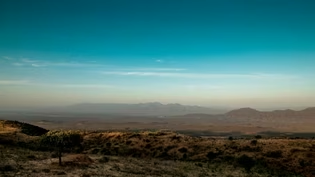
The Secret to Our Success - Connectivity
Clip: Ep2 | 2m 19s | 200,000 years ago, a new species appeared on the African landscape. (2m 19s)
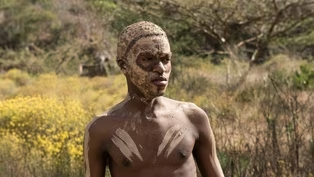
Omo 1 - The World's First Modern Human
Clip: Ep2 | 59s | 195,000 years ago, Omo-1 was a hunter prowling the east African savanna. (59s)

Preview: Ep2 | 30s | Examine research that suggests we humans are patchwork species of hybrids. (30s)
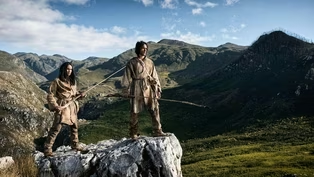
Preview: Ep1 | 30s | Learn why a discovery in Mexico may rewrite the story of early migration to the Americas. (30s)
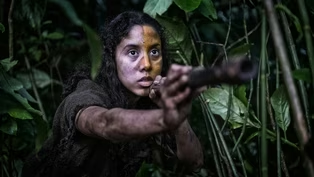
Eva of Naharon - The First American?
Clip: Ep1 | 1m 2s | Eva of Naharon was discovered in 2008 on Mexico's Yucatan Peninsula. (1m 2s)
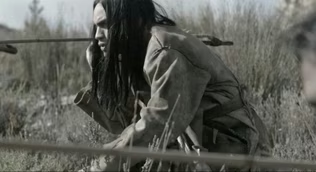
The Clovis Point - The First American Invention
Clip: Ep1 | 48s | The Clovis point is an amazing piece of Stone Age technology used to hunt animals. (48s)
Providing Support for PBS.org
Learn Moreabout PBS online sponsorship
- Science and Nature

Explore scientific discoveries on television's most acclaimed science documentary series.
- Science and Nature

Capturing the splendor of the natural world, from the African plains to the Antarctic ice.


Support for PBS provided by: