
A Salute to Veterans
Season 4 Episode 1 | 54m 50sVideo has Closed Captions
Powerful stories from prior seasons explore military service, sacrifice and healing.
Powerful moments from prior seasons come together in heartfelt conversations about military life and what comes next. Explore the Vietnam War, the sacrifices of service members, women in the military and lifelong journeys of healing, honoring the men and women who took an oath to serve their country and protect its freedom.
Problems playing video? | Closed Captioning Feedback
Problems playing video? | Closed Captioning Feedback
Support for this program was provided in part by Kloo and David Vipperman, Barbara Kucharczyk and Robert M. Rainey.
A Salute to Veterans
Season 4 Episode 1 | 54m 50sVideo has Closed Captions
Powerful moments from prior seasons come together in heartfelt conversations about military life and what comes next. Explore the Vietnam War, the sacrifices of service members, women in the military and lifelong journeys of healing, honoring the men and women who took an oath to serve their country and protect its freedom.
Problems playing video? | Closed Captioning Feedback
Where to Watch After Action
After Action is available to stream on pbs.org and the PBS app.
Buy Now
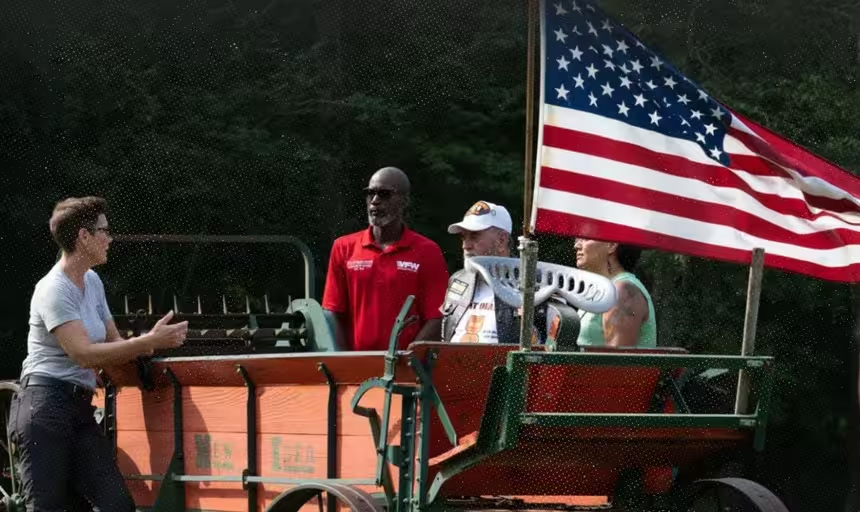
Demystifying Veteran Experiences
"After Action" seeks to demystify the military experience, provide a platform for dialogue among family members and preserve military stories, many of which have, to date, been left untold.Providing Support for PBS.org
Learn Moreabout PBS online sponsorship-Welcome back to LowCountry Acres.
I'm Stacy Pearsall, retired Air Force combat photographer and host of "After Action."
Since the start of the series, I've had the privilege of welcoming more than 60 veterans from every branch of service to my farm for honest, heartfelt conversations about military life and what comes after.
In the conversations ahead, we'll revisit some of the most powerful stories about women in service, the Vietnam War, personal sacrifice and healing, and the experiences that continue long after the uniform comes off.
This is "After Action."
-♪ There will be light ♪ ♪♪ ♪ There is a road ♪ ♪♪ ♪ Marching on ♪ ♪♪ ♪ Coming home ♪ ♪♪ ♪♪ Major funding for After Action is provided by the ETV Endowment of South Carolina, the proud partner of South Carolina ETV and South Carolina Public Radio, and by America's Vet Dogs.
♪♪ -What does it mean to return with honor?
-Maintaining our honor in the prison.
Because the Vietnamese really hated that, when we referred to anybody by their military rank.
And then to come home with our heads held high.
And for us, that was very, very important to know that we could do that because so many -- so many ground forces came home and got spit on, got things thrown at them, were disdained, and it was horrible.
-When I got to Vietnam in '68, I was a first lieutenant at that point.
May 25 of '69, First Lieutenant William Dye died, and he was my best friend.
And we shared foxholes, did everything together.
Uh, but he got killed on the 25th.
I got hit on May 29th, four days later.
I actually wrote my mother a letter.
I actually told her I thought I was gonna die soon.
I just had this premonition coming on.
And, uh, on the 29th, we were in a big battle on the Cambodian border.
Uh, just -- I got hit in the right foot, in terms of this massive explosion.
And that's literally what saved my life.
Because when they blew these limbs off, it cauterized everything, and I didn't bleed out.
But I was actually -- my records show that I was actually pronounced dead.
Uh, Dr.
Julian Megs, I found him to say thank you.
He was the doctor that, uh, saved my life, you know, and he doesn't know why he did what he did to me.
And what's really interesting is, all the guys that were there when I got hit, they all prayed that I would die just due to the severity of the injuries that they saw.
I woke up seven days later.
I didn't have to ask what was going on.
I had -- and it's documented -- what's called a near-death experience.
And I got hit in May 29, '69.
I didn't leave the VA until March 5th of '71.
-Wow.
-So I went through 33 operations during that time.
They told me I could walk on artificial legs.
I decided I was gonna be the best triple amputee that's ever been.
I haven't achieved that and never will, but at least I'm trying to get there.
-There were three different types of hospitals in Vietnam.
There were the -- the lowest would be the MASH units.
There weren't too many of those.
There were surgical hospitals which took care of small little things like broken bones, you know, that kind of thing.
Then there were evac hospitals, or evacuation hospitals.
Patients would be triaged and evacuated, sent to either a MASH unit or a surgical hospital or an evac hospital, depending on the severeness of the injury.
-It's not always the wounds that we see that cut the deepest.
You know, it's those that -- that kill us slowly.
-So many of the Vietnam veterans are still suffering because they were organically wounded or, you know, legs lost or whatever.
Or mentally.
-Mm-hmm.
-It's a spiritual connection that you don't need to -- you know, you don't need to analyze that any more than that.
-Mm.
-Okay.
-And I think you feel this with -- with the young man who is dying.
He doesn't deserve it.
You know, he doesn't deserve it.
At the age of 21 or 22, he doesn't deserve to die.
But he's dying.
You know?
And in the case of Vietnam, he did not even believe in the cause.
-Mm.
-Okay?
He was drafted, and he was sent to Vietnam.
And he was slaughtered, and he is dying.
-Mm.
-I mean, okay, even the Second World War, Civil War, whatever, maybe you believed in the cause.
Maybe you showed up, and you enlisted.
These were draftees.
I mean, it takes you from his spirit to my spirit, the one who is dying to mine.
-Mm.
-I want to tell you the story of Sharon Lane.
-Okay.
-She graduated from Aultman Nursing School in Canton, Ohio, and was accepted in the Army Nurse Corps, and she was deployed at the 312th Evac Hospital, which was in the northern part of South Vietnam.
Vietnam War was a guerrilla war from the North Vietnamese point of view.
They shot at all kinds of things and occasionally at hospitals, too.
So on the night of the -- night of the 8th of June 1969, I was in bed and the siren went off.
So I grabbed my stuff, and I ran into the bunker and I sat in the bunker.
And, suddenly, there was this huge sound of an explosion, and I could really feel the shaking of the ground.
And that actually was the -- the grenade, the bomb, or whatever it was that fell on 312th.
The bomb fell on 312th Evac, and a nurse was killed.
That was Sharon Lane.
There are eight nurses who died in Vietnam during the war was going on who were deployed there.
She was the only one who died of enemy fire.
I just wanted to tell her story because... there were the -- the angels of... They were the angels, the nurses who served there.
-I joined the Army Nurse Corps.
Then I went to Vietnam for a year.
I was at 3rd Field Hospital in Saigon, 71st Evac.
And then, after that, I didn't want to ever see the Army ever again.
I was so filled with anger and rage.
-Mm-hmm.
-And I don't think I'd ever felt rage before, but it was just welled up in you when you would see these kids come in.
-Mm-hmm.
-...that the Army was not valuing them, that the government was not value-- These are citizen soldiers.
These are not mercenaries that you've hired.
They're citizen soldiers.
And they've done what you've asked them to do.
And you haven't valued their bodies and who they are.
'Cause every one of those kids was a person and had a family and, you know... In the normal emergency room, everything makes sense.
The fat guy has a heart attack, and the kid with no helmet on has a head injury, and kid falling out of a tree broke his arm.
But over there, you had perfectly healthy young men being blown up.
And that, to me, was what was so horrifying about it.
It was so out of kilter for anything.
You know, I'd seen people with terrible diseases, and that made sense.
But this total devastation to a human body for no reason except being blown up... And I think that was the hardest thing to adjust to.
Especially since most of the guys over there were between the ages of 18 and 23.
And those were the ages of my two younger brothers, you know.
And so every kid that came in was mine.
-Mm-hmm.
-And you took it personally.
And that was the thing that you really had to watch.
Now, I'd never done this before.
I'd been to the wall but not alone and at night.
-Yeah.
-And I went, and I knew where the guys were from the time that I had been in Vietnam.
And I stood there, and I put my hand on the wall, and I just started crying.
And I kept saying, "I'm sorry."
-Yeah.
-I am so sorry that we couldn't save them, that we couldn't protect them.
-Mm-hmm.
-That, to me, was... my job, you know?
-Yeah.
-I was supposed to protect my brothers.
-Yeah.
-I know the brothers don't feel that way, but it... And I couldn't protect these guys from this horrible war.
-I came to join the army.
My father before me went, as his dad did, too.
He was almost done with his tour.
There was some questions in my head at the time, too, is like, you know, "Why didn't he just stay?
How come I had to be the kid that grew up without a dad because he wanted to stay?"
I don't understand why he wanted to stay, and it kind of made me mad, you know?
But then, when I joined the Army, and I completely understand why he stayed.
We actually went to Vietnam in 1999 with the guys that were left out of his unit.
Uh, we walked up on Hill 376 where he was killed, on 30 years to the day.
We actually met General Burke, who was his lieutenant at the time.
Um... And Lieutenant Burke is the one that put him in for the Medal of Honor, um, 'cause... And it wasn't so much just for that action as all of his other actions leading up to it.
And I mean, he was just a consistently good-hearted person, you know?
Doesn't sound like he ever had a bad bone in his body.
And, you know, then just to lay down the ultimate sacrifice.
-Sacrifices come in many forms.
As we've just heard, it can mean laying down one's life for their country.
It can also mean carrying the weight of traumatic experiences from serving downrange or making personal sacrifices that, for a time, keep someone from living as their authentic self.
♪♪ -In the '80s, if you identified as being a member of the -- well, the L community, in my case, as I move through that, what I found is that, while I was gay, my first identity was as a soldier.
Because I really embraced and I came to just own the values of service and what it meant for my uniform to represent America wherever it is that I wore it.
And so it was this, like, tradeoff is like, "Well, this is what I'm going to need to do in order for the privilege to serve.
And that was fine.
But as time went on along those 25 years, it did get harder because so many things around me begin changing.
Um, there was greater understanding of the LGBT community.
There was things that were happening from a policy and a law standpoint.
And so one of the hardest things about being under these policies is that you weren't allowed to be your own good example of why you were not only not an affront to good order and discipline, you were the reason that the unit had good order and discipline and high morale because of your particular leadership.
-You talked about having this Army identity, Army first.
What happens when you fall in love?
What does that look like for you?
-It screws up everything.
I tell you.
[ Laughter ] Yeah.
I mean, um... 2004, I met Tracy, and, um, I tell you, when you meet, like, your person, it's hard to keep that secret, because you want to share with everybody about the person you -- I mean, you found them.
You know that you love them.
And so Tracy and I knew that we wanted to be together.
and it was the first time that I think I loved something more than the Army.
And, um, she had to come in the closet to be with me.
I mean, that was kind of how our relationship worked.
And, um -- and so what that caused, though, is, 2004 on, it just got harder and harder to be in the Army, 'cause I couldn't share the very best thing in my life.
And so it became just really hard.
I felt like, like I say, my values no longer aligned with the service values.
And it -- it got so hard for me that, um, at this point, I was a colonel.
This would have been about 2009 or so.
I decided the only thing that I could do was retire.
And so I requested my retirement orders, and I was going to go ahead and retire as a colonel.
And so I got the retirement orders, and it wasn't but a couple of months later that Chairman Mullen, the chairman of the Joint Chiefs, got called down to the Senate Armed Services Committee to give his best military advice on whether or not the Congress should consider repealing Don't Ask, Don't Tell.
And he went down there, and he said, um, you know, "My personal opinion is that I -- I don't understand how we can continue to put our young men and women into this position where they have to lie about their integrity in order to serve their nation.
And I saw him say that on C-Span, and I cried, because it was the first time that a senior military officer who was still serving in uniform said that my service was as good as anybody else's service.
And he gave me hope.
-Being a parent in the military and having a significant other aren't mutually exclusive.
Were any of you a single parent at any point in time?
-I was, yes.
-Okay.
-And, uh, from Patrick to, um, Minot, I found out I was pregnant with my first child.
Um, it was a challenge, but it was doable.
I had so much support.
I have to say, I haven't had, um... I don't really have horror stories, you know, about, um, having to juggle.
They were very supportive.
It was hard.
It was challenging.
There were times where, you know, you still stress about childcare and if they're in the right place.
-Were you still required to go TDY and to deploy being a single mother?
-Well, Minot was kind of a different, um, animal.
We were part of the comm squadron.
The longest I was away from her was 21 days.
Minot's almost like a remote because it's so isolated.
So you become family, you know, just like in Europe or anywhere else -- with your co-workers.
And she knew everybody.
So we had pretty much family there that, you know, were able to help me out and take her, and she would feel at home.
It wasn't strangers, you know, that she was with and stuff, so it worked out.
But that was hard.
I mean, I missed her.
-You know, you were in Iraq, going outside the wire from time to time, seeing some pretty bad stuff.
Was there any moment during your deployment where you thought, "Why am I doing this?"
-It... If I did, it was fleeting.
Um... 'Cause it's hard to go there when you're surrounded by people that you care about, and you know that you can't let your guard down.
Um, and you have a job to do.
So I think I thought about how they looked at me.
I want to say, you know, my kids were proud of me.
And, um... I never would want them to hear, you know, "Hey, I made a mistake by going," because I don't think I did.
It was hard.
[ Chuckles ] But, um, you know, you just want your kids to be proud of you.
And so I'm glad I -- I did it.
I hated being away from them.
And I always asked them, you know, "Did you feel like I abandoned you?"
And, um... I know it was toughest on the -- Well, the two little ones.
I think it was hard on them the most.
But my eldest is like, "Mom, I always thought you were there.
You know, I never felt like we were neglected or abandoned," which I'm so grateful for.
And I think they all do feel like that.
But it was hard on them, you know, to be gone.
-So 9/11 happened, and that inspired you to re-enlist?
-Yeah, I was already talking to a recruiter.
Like a month before it happened, I started talking to recruiter, like, wanting to go back in, and he's like, "Ah, it's gonna take a long time.
You've been out.
We got to do this whole background check for 10 years.
It's really hard to get in right now."
Of course, he had no idea what was about to happen.
-Right.
-And all of a sudden, boom -- 9/11 happened.
That morning, I remember sitting there, watching the news.
I was just living north of Seattle during that time, and you saw the second plane hit, and you knew right away.
I said, "Terrorists."
Told my wife at the time, "Terrorists."
Knew what it was right away.
And she goes, "Well, you don't have to go in the Army then."
Said, "No, this means I need to go."
I knew, having my experience in Desert Shield and Storm, as being 17, 19 years old, that I had something I can teach these other young men and women that are about to go to war.
And I was still young enough to still fight.
I was 30 years old.
I could still fight.
I could still protect our country.
We've been attacked like that.
I knew having those skills that I had from before, and loving that job and the camaraderie and that I could still fight and protect my country.
I couldn't just sit there and just let that happen and do nothing.
-Okay.
So, Bobby, I know we were in Iraq at the same time in '07.
-Yes.
Well, that was when I got hit.
So, it was April 7th.
We were rolling out like 730 in the morning.
Um, the Humvee got hit at 5:00 in the evening.
I don't remember the whole day.
I remember having a cup of coffee that morning.
That's it.
-Really?
-Um, it was -- like I said, it was three to four 155 rounds.
Found this out later.
Buried in the sand on the road.
Threw the Humvee 20 meters, left a hole 5 feet in diameter and 3 feet deep.
The pictures I have, you barely even recognize the Humvee, except for my door is flipped upside down, and they say I was burnt to the skull, but I think, looking at the photos afterwards, three years later, definitely a convertible.
I could have been drugged, and my helmet wouldn't be on.
Because the other guys with burnt heads, and it's not as lumpy.
Their skull is messed up.
They had to shave parts of my skull because it was so bad to get skin up there.
Took 18 months, so I was burnt over 38% of my body.
The other four men died in-country.
Six months in-patient, three years total recovery.
But then I went on to have surgeries and surgeries after.
So I'm up to 48 skin-graft surgeries.
-Once the war started in Iraq in 2003, I was still in college.
And toward the end of my college time, I started working for the U.S.
Army as a linguist, a local national linguist at the time.
And that was the beginning of my transition to move later to the United States.
-You were supporting the coalition by being a translator.
And that led to a lot of threats to both your life and your family's life.
And if we all know, we want to protect our home and our family.
So do you mind sharing a little bit about what the circumstances were that really opened your eyes to having to make these hard decisions?
-I want to preface this by saying this.
You know, my story and my journey is not special.
Thousands of linguists and, you know, from Iraq, from Afghanistan, from Korea, and every experience that we had as a U.S.
military, there are similar stories and even better than mine.
Um, I think it goes back to being a free mind, uh, and having the choice, the good causes that we stand up for when we deploy and go do the humane part of our mission.
All of those adds up and makes you an American and makes you choose this way of life.
-Mm-hmm.
-So, starting off, I think it's similar principle.
It doesn't matter what soil that we're born on.
Uh, it's the humane part of that mission is what, you know, got me drawn into working with the Army, is watching the troops that travel across the globe to come and liberate a country.
And, uh, I believed in that.
And I believe that those soldiers, uh, came there for a good cause.
And they were struggling with that portion of the language barrier and the cultural barrier with the Iraqis.
As you continue working, you put a target on your head 'cause there were, you know, evidently a lot of people that opposed what the U.S.
military and coalition forces were doing in Iraq, and they were trying to, uh, you know, put obstacles in our way.
And one of the things they were doing is targeting the linguists and the locals that helped the coalition forces.
So a lot of us linguists were, uh, you know, targeted, our families were targeted in many levels.
And I was fortunate to stay -- you know, stay alive and leave the country, ultimately.
But, yeah, during that time, obviously it was -- it was the peak of the war.
Everyone was being targeted.
Anytime, you know, we had to leave and go home for leave for several days, you've taken a tremendous amount of risk.
You didn't know whether you're coming back or not.
And the experience that I shared with you earlier was probably my last time, I think, that I went home, ever.
Came very close, you know, to losing my life.
I was very close to being, you know, picked up and possibly killed by those who opposed what I was doing in my own home.
And, uh... But, again, I leaned on the people that I trusted, and they came through.
Many decided to try and leave that path.
Very few I know that were successful in doing that or stayed alive after.
-They were killed.
-Yes, they were killed.
-I remember when we were in Iraq, and I met four Marine, and they were, um, excited about, um... Outside the wire, they -- they set up a, um -- a little chapel, and they were very young, too -- 18 and I think one was 19, 17.
But they were so excited.
We was in the gym lifting weights and these guys was like bulk, and they was just going at it.
"Hey, Chap!
So, when you come out outside the wire, Chap, I want you to come over and worship with us because the Lord is really doing great things there," and so on and so on and so on.
And I'm thinking in the back of my mind, first of all, the commander is not gonna let me outside without... -That's right.
-...you know, without, you know, going out with a convoy.
But I looked at them, and I told them that I will visit them.
And around 2:00 that morning, I got a knock on the door and said that, "The commander needs you to come to his office."
And so I got dressed and went to the office.
I was told that a convoy that was going out got hit and four Marines died.
-Mm.
-I said, "Names?"
And when he told me the names, it was those four Marines that said, "Hey, Chaplain."
-Wow.
-"I want you to come out and visit our little chapel when you get time when you go outside the wire."
The only thing that brought some consolation to me, that kept me together -- because I almost fell out in front of the team -- is knowing that they had faith and they had some type of relationship with what they was believing in.
That's the only thing that held me together.
-Wow.
-Um... -Thank you for sharing that.
Did you grieve in that time, or did you have delayed grief or have you processed it?
-Very delayed grief.
I couldn't in front of the team because they were grieving.
Um, the commander was lost for words.
He didn't have anything to say.
He said, "What do we do next, chaplain?"
Um, usually that's the case.
Commanders are very good at doing their job, but when it comes to death and dying, um, we are the subject-matter expert they look at.
So my grief was very delayed, and I couldn't take part of the memorial service.
I asked to be -- I asked, "Could I be excused from taking part?"
Yeah, I think one of the hardest things that -- that still haunts me now is that, when you get ready to go on a deployment and you are gathered with the family outside just before their spouses get on the bus... -Mm.
-...and you look at spouses, and they know who you are, and they say, "Chaplain, please bring my husband back home."
And when you go forward, something happened to several husbands, spouses, and they die.
And trying to prepare yourself to return back... 'Cause they're gonna be there.
And you can remember that conversation just as though it was yesterday.
"Chaplain, please bring my husband back home."
And I had a kid who said, "What happened to my daddy?"
And I couldn't do nothing but just grab her and hold her.
So, that's... That's hard.
I could put a good poker face on, um, as though things are fine, um, but, you know, when the lights are off, I cry out to God, And I know that, um, it's only God who has helped me, um, thus far.
♪♪ -The experiences I took away from service will stay with me for life.
Some memories bring me great joy and pride.
Others are definitely harder to revisit.
Like many veterans, healing and learning from those experiences is an ongoing journey.
Healing also looks different for each of us, but one thing remains true.
It's rarely a path we walk alone.
-One of my corporals, he had completed his life, and he worked in my section.
You know, when I was in the Marine Corps.
And so it hit me really hard because I had spoken to him the week before, and he never said anything.
Like, he never said, "I need backup," right?
"I need ammo."
Like, he never said anything.
So it really hit me hard because I felt like we're -- we're letting each other down.
Like, forget the VA, forget all the institutions that have all these red tapes.
Like, what are we doing for each other, right?
We robotically say, "I got your six," but do we really, right?
So, I was like, "I want to go back to school for art therapy," right?
'Cause art has always been the one thing that helps me filter life.
But I wanted to understand the psychology behind it, and I wanted to understand the knowledge and how I can, you know, bring that platform to our veterans.
-So, forging forward came from me, 15 years of not asking for help and trying to figure it out myself.
And I learned outlets help me.
You know, going on these wounded-veteran events and stuff like that, yeah, that was helpful to be around other veterans, and you understand the camaraderie, and someone else has been there and done that.
So you communicate well together.
But a lot of them are just being big parties.
Like, "If I did it, I would do it this way.
Teach others how I forge forward through the fire."
And that's why we called it Forging Forward.
So now we do retreats for veterans and first responders.
But you learn an outlet that weekend.
Our first one we did at Camp for Heroes, in North Carolina.
The veterans -- we brought in six.
We keep small groups, anywhere from 4 to 10.
We don't go any bigger than that.
So, they went, and we learned axe throwing, which is a good outlet.
Just get out there and just throw some axes and focus on that.
-When I was doing my thesis, I did it on the -- the therapeutic benefits of working with clay, with veterans with PTSD, and as a side component to this, I did my first solo exhibition and I had 12 sculptures, and it was literally, like, 12 sculptures that represented moments or chapters in my life that changed me.
And I think that was the first time I was able to self heal and self reconnect my emotional, like, cables.
Because as I was creating each sculpture, I was going back in time and remembering how I felt and, you know, even smells and sounds and stuff like that.
So, like, in the process of me creating this exhibit, I reconnected myself, you know?
And I think that's -- that, to me, was the moment where I was like, "This is what we need.
This is what -- This is my calling.
This is what I want to be able to offer to other veterans, to be able to reconnect to themselves."
-In the last year, we've lost two people from my old unit to suicide.
And, um, you know, these are the things that we have to sit down and ask ourselves.
Why aren't we being more open about it?
-We don't say "commit."
We're teaching "died by suicide" because it's not a crime.
It's their mental illness that took their life.
The injury they sustained overseas -- they're all combat veterans -- so that injury took their life.
To me, that's the same as me dying on the operating table.
The injuries sustained in war is what took my life.
Same thing when it comes to suicide.
They lost that battle.
I have, um -- This is gonna be hard.
[ Chuckles ] Uh, it's all about veteran suicide prevention.
You know?
It's, uh... I have a mixed thing on that.
I understand, when they go, that they're in a better -- It's so bad for them that they had to be in that better place, so I'm happy that they got there.
But I wish they thought of another way.
I wish we could have stopped them somehow.
So I will do my best to do that, and that's, without the outlets and the remembrance tags, I have 200 veterans names that have died by suicide.
-One of the bigger gaps I felt in my life that I couldn't put a name to was a gap in -- in being a part of something bigger.
-Mm.
-Because when you're in the military, you're serving your country.
And so when you get out, if you don't accidentally fall into something that fills that hole, you don't realize that there's a hole there.
And so me getting involved with -- with, you know, nonprofits after I got hurt, it fills a gap that you don't realize that you have.
The thing -- People like to focus on one or two things, and the problem is, is that mental health is a three-part problem.
It's physical, mental, and spiritual.
With you being involved in helping veterans through animals is a spiritual thing.
It's something that's bigger than you, that gives you fulfillment and allows other people to be involved in something.
-What is so successful about animals is it brings us together.
We don't have -- we don't have to go to this program.
We don't have to go thinking, "Hey, this is gonna be therapy.
We're all gonna share war stories."
No, we can go and say, "I'm gonna go have some time with some parrots."
-Yeah.
-"I'm gonna go have some time with some horses, and then, if I can work through some of this stuff with like-minded individuals, then that would be beneficial."
-I got involved because I was on the ski trip.
They had a facility dog there by the name of Deuce.
I fell in love, and I put an application in for all the wrong reasons.
And so I absolutely realized that not only was Benjamin trained to help mitigate that physical disability, uh, I got that sneaky therapy.
I mean, I had somebody to talk to.
Being completely surrounded by people or animals that you trust is important.
-What is this journey, Elba?
-Um, it's the new normal.
Man, I'm gonna cry.
Sorry.
So, you know, I always look at my service as -- In the end, the service, when you go into the service, is the military took whoever you were, they took you and broke you down and remolded you into the vision that they needed, the military needed you to be.
So they took you down and remade you into a new, a different version of yourself.
Right?
So the journey is discovering -- almost sometimes it feels every day -- what my new -- what the new normal is.
Because, like you said, we don't have the exterior wounds.
We don't have the exterior issues.
2018 when he realized, "Oh, from something from 1964 is now impacting me in 2018."
You know, with the deny, deny, hope they die, it makes a veteran and it makes their service a ones and zeros.
It's a dollar amount.
The four of us are sitting here trying to take something that is extremely difficult and make it positive, right?
So when you're dealing with deny, deny, and hope they die, it's real hard to hold on to that positive.
That's that journey, right?
It's real hard.
I can't -- I can't -- Sorry.
I 100% tie to the way the veterans are treated to the suicide death rate.
I 100% tie it to divorce rates, the domestic violence, all of that.
Like, you can't tell me that's not a substantial factor to what's going on -- right?
-- with these veterans.
I struggle because I am actively ill and sick.
And I have, um, a 10-year-old and a 14 1/2-year-old.
And so I think the biggest thing that I have to share is, it's okay to take a knee.
I had to take a knee last month.
I think we go through this whole time of being so used to pushing ourselves... ...rub some dirt in it.
"Drive on, soldier."
And so I think is reminding those -- And I tell my kids that all the time.
It's called space and grace.
Give yourself the space to have grace.
-Being injured in Afghanistan, it kind of gave me a sense of purpose, and I'm mission-driven.
And I think a lot of soldiers find that once your one mission ends, you know, this new mission begins.
Farming kind of saved my life.
You know, really, I feel like, grounded me in something bigger than myself.
Especially as we come through war.
When you're seeing life being taken, it's really humbling to see something new being born.
I think it really reaches you at the -- the human level that I think a lot of other ways of therapy can't.
And really being in a really rural part of North Carolina, agriculture is all around us, and I kept thinking to myself, "How can I be a part of something that still could service my community?
", and farming became that new service.
You know, I think transitioning out of the military, you know, I think we often don't do the best job in transition.
You know, and I really need it.
You know, I needed a community more than I thought.
You know, I thought I wanted to be all alone on a farm.
The one thing I learned about the farm is, farming is very isolating, you know?
So, one thing is, I had my dream of being a farmer, but I was always alone.
You know, the farm became, like, almost a compound, to a certain extent.
And so it became a gift and a curse, you know?
So as I kind of dive deeper into the farming, I kind of needed my community to kind of, you know, be along the journey.
And so that's how we started our pick-your-own operation, letting the community into my story.
-I was fixated on all the things the doctors were saying that I couldn't do, including ride my horses anymore.
And I think that really was the biggest thing that put me in a downward spiral, in terms of my mental health.
At some point, I finally was just like, "I'm gonna completely disregard everything and -- everything they're telling me and do what is best for me," and that meant getting back to my horses and farm life.
Honestly, it really -- it was one of the best things that ever happened to me in my life.
But what intrigues me a lot is just getting outside and breathing the air, spending that time with my horses, who don't pass judgment on me.
I can go out there with a dark cloud over my head and come back in not accomplishing anything other than letting it all go and coming back in and be perfectly fine and happy and be like, "I feel okay."
Dirt under my nails, perfectly happy.
While women have played significant roles throughout our nation's history, they have often had to overcome barriers to serve in the military.
Through courage, determination, and resilience, they broke through those barriers to help shape a more integrated and diverse force.
Though often overlooked, we recognize the women who pushed forward and helped pave the way for those who are serving today.
-In my first year in the Marine Corps, there was the training in Seattle for a woman Marine company, the last one that existed in Camp Lejeune.
And I got in touch with someone at Recon Battalion out on the beach, the training NCO of Recon Battalion, and I said, "Hey, what'll it take for us to come out there and do the rappelling on the tower?"
And he said, "Come on out on the weekend.
We'll do it."
And I put the word out.
About 30 -- 25, 30 women signed up.
We went out to the recon rappelling tower on a Saturday, 90-foot tower, and in civvies, jeans and T-shirts, started doing rappelling.
Had no clue what we were doing, and had one recon trainer out there with us.
Well, of course, word got to the captain, and I got called on the carpet Monday for doing something that was just absolutely forbidden.
And then, when the captain got done reaming me for this, said, "Dismissed."
And as I started to step away, and she said, "Wait a minute."
I turned back around -- "Yes, ma'am."
She said, "Make sure you make an entry in everybody's service record book that went that they did this."
-Wow.
-And I kind of had that little grin going.
I said, "Yes, ma'am.
Gotcha."
[ Laughter ] And then, when I went to the drill field, we were separated.
Women did not do this.
We weren't doing the combat training.
And the Crucible event for the end of training that -- it exists now, did not exist then.
And we were a test platoon for one of my groups for taking women to the rifle and pistol range for the M16 and the .45 pistol, and that was '78.
And women weren't allowed to fire for record to earn the badges, actually.
As recruits, as a group, they weren't allowed to until, I believe, it was '81 or '82.
But we were the first test platoon to take women out there.
-My deployment to Afghanistan was with the female engagement team.
So, we were an all-female organization that essentially bolted on to infantry units.
And the half of the population, women and children, that were kind of typically put off to the side, um, male infantry were unable to engage with those people.
So they assembled these FETS is was what we were called.
And so we partnered up, and we were embedded with these infantry units.
And we did all the stuff and the things that those infantry units were doing.
And we were like -- So, you had the Lionesses in Afghan-- or, in Iraq, and then the female engagement teams were kind of the equivalent, but with a little bit more specific training.
So, Lionesses were just assembled from like, "Okay.
How many females do you have in your organization?
How many do you have in yours?
Can I get a couple of them?"
-Pick-up team.
-Yeah.
"Ready?
Go."
And then, they realized the... What we were able to do and the information that women and children had, and just trying to build relations with those people, that they needed women out there to be a part of that.
So there is a level of fear that I think that I had more so of being responsible for these young women.
I was a staff sergeant at the time.
Um, and I was their platoon sergeant.
And it -- the thought of something happening to them under my charge was -- that level of responsibility, um, was -- was not lost on me at all.
To see such selflessness from young women to want to make a difference and to do something that had never really been done before, um, and taking that job seriously, understanding that, um, "This patrol that I'm gonna go out on, it could potentially be my last."
So it was a bunch of women from, um, jobs ranging from intelligence to communications, um, to logistics to every supporting element within the Marine Corps, the biggest challenge was credibility off of the jump, um, being looked at as, "Can you guys keep up?"
And one thing I can say is, uh, we did -- we showed up.
And it was gratifying to see when they think that, "Okay, this patrol is gonna get 'em," and we are in chest-deep water and rifles over our heads.
And we're -- "I'm right there behind you," you know?
Just to see their resiliency and just their sheer determination, if nothing else, um, to prove people wrong, that we are valuable within this organization, in my original capacity and also here.
But I must say, though, that we formed tight bonds and relationships with our male counterparts.
And we proved to them that we are worthy of being here and we -- our contributions are, uh, valid and they are integral to what it is that you're doing at this patrol base, at this forward operating base in any capacity here on the battlefield.
War is indiscriminate.
Everybody is -- is impacted, was impacted.
And it wasn't just, you know, "Oh, I knew somebody that was there that day or that experienced that thing."
Um, it's -- it's utterly devastating.
-I was there... seven months deployed.
And we didn't think anything of it.
Like I said, it's a family thing.
We -- Korea, Vietnam, every conflict, we've had a family member serve.
So I deployed thinking it was no big deal.
And, you know, we deployed, conflict started.
Three days into the conflict.
We were in that initial long convoy that you saw the videos and stuff.
We ended up falling back.
Signaling wasn't great.
We weren't getting any radio.
And we go into Nasiriyah, and it's not secure.
We go in, initially -- I'm distinctly remembering.
We go straight, we take a turn to the left, and it goes up like a "U," and then we stop.
They said, "The city's unsecure.
We got to get the hell out."
So we start going back.
And they had set up a lethal ambush.
They cut us into three sections.
The first part of the convoy gets out.
The second part is bogged down, taking fire, but they're fighting back.
The end of the convoy is where me and the guys were bogged down.
And, uh... we lost nine from 507th and two that were attached.
And, uh, myself, the four guys, and Jessica were captured.
Actually, Laurie was captured, too.
She was captured alive, and she died of her injuries.
I was shot during the ambush.
They beat the holy crap out of me, until they realized I was female.
Then they kind of backed off and separated me from the guys.
-What was the biggest fear in that moment?
-Being taken away because I don't know what's happening and there's nobody to see.
-Mm-hmm.
-Um, even if they ended up killing me, Riley, Edgar, and stuff, would have seen it.
And there's something I don't think some people understand.
There's something to tell my family.
I think that was a thread through my whole captivity is, if I don't make it, my family needs my body.
And maybe I have a little anxiety about that now.
I need to -- you know, there are times when I'm alone, but I can't be "alone" alone.
-Mm-hmm.
-You know?
Uh, I'll sit in my house alone, but, you know, my sister lives down the street, my parents are around the corner, and I know my parents are gonna call me and stuff like that.
I can't be -- just disappear and be "alone" alone.
You know?
So, I spent 22 days as a prisoner of war until the United States Marine Corps came and saved the day.
You never do it alone.
I think we give this mysticism that "He survived alone."
No one does anything by themselves.
We do it as a community, as in a group.
We support each other in every way possible.
But it's hard for people to support you and give you strength if you don't ask for help.
Reaching out and getting help is not a weakness.
It is a strength because you recognize that you need help, and then you can go from there to fix the problem.
If you don't admit that you need help, you'll never get better.
-I guess you don't realize that it's groundbreaking at the time.
I'm like, "I'm just me, I'm a girl, and I just showed up to fly.
Here I am," and this stuff is kind of funny.
And now that I -- if I ever do tell people, then they want to have all these questions.
And sometimes it gets more uncomfortable to me because it puts all the focus on me, and I don't want it there.
-Yeah.
-So I will kind of downplay it.
Like, "Well, yeah, I -- I mean, I flew helicopters."
There's lots of people that have flown helicopters, so... -But, you know, I mean, so many young girls never saw themselves represented in that way.
So the reason why I think it's such a big deal is it's about representation and being able to visualize yourself being an Army pilot.
If you've never seen that represented anywhere, then it's hard to be able to be like, "Yeah, I could be that."
You were lucky that you had your dad who was a pilot.
And so that was somebody that was there every day that you could be like, "Okay, here's the Army, here's my dad.
My dad can do it, I can do it."
-Mm-hmm.
-But for all the other young girls sitting at home, watching air shows or doing this and that, it's usually men.
-It was clear that I was an anomaly.
-Mm-hmm.
-You know, people a lot of times will ask, if they do get the wind of, "Oh, you're the first female," and they look for all these horror stories because all you hear right now is the sexual harassment and assault in the military and how they're on the rise, and I don't diminish that at all.
But it always gets spun that way, and the way that I like to tell it is, I had a really good experience.
Did some threads of things happen?
Sure.
But I think there's a huge shout-out to the large majority of men in the unit who were accepting and supported and mentored and that are still out there supporting, and that maybe it's not that we need less of the bad stuff, we need more of those good people.
-Yes.
-Because I was given a hand up by more than one individual that were male, and I found those people and clung to those people, and I still keep in touch with those people because -- And I say "people" because it's not just men.
They were good people.
And there was a woman, you know, that mentored me, as well.
In fact, my, uh -- my daughter's named after her.
So, um, you know, there were people that -- that make a huge difference.
So when we say you're the first of anything, okay, but who was there to support you?
Can we talk about that?
-Everything about my military experience, I always felt like I had to exceed standards.
And there was this voice in my head.
"You need to be better than what the expectations are, and you do not want to be the girl that falls back and ruins it for all the other women that come behind you."
We do this to ourselves, and for me, it's like it was self-inflicted.
Everything that -- But I think it was also environmental.
-Mm-hmm.
-Thank you.
-I was gonna say no.
Is it really?
Because you have that, like you say, these unspoken expectations.
-Yeah.
-And you can feel the pressure.
It's palpable.
And as much as you want to try to rise above it, it permeates you, and it drives your decisions and your performance and how you show up.
It's something hard to avoid.
Whenever you're an other, whatever that "other" is, That's where you feel the scrutiny and the pressure.
And it is something, um... It's something I've lived with.
I can't speak -- but for me, I've always lived with it.
Whether it was I was the only woman or the only Black person.
But what I have noticed in -- now I do tell people about it -- is people's reactions to it, and particularly when I am talking to, um, a Black woman or a man, um, especially the younger ones.
And I know -- I didn't know photography was a career path.
I had no idea.
Had no idea the impact of what we do until I got into it.
And I just thought, "If we all see the world differently, shouldn't we -- shouldn't there be more of us out there seeing and saying?"
-Mm-hmm.
-And again, in Combat Camera, I'm watching all of these people do these amazing things, and they're instantly becoming my heroes and my touch points in life.
And I realized there was nobody that looked like me.
And I was like, "Hmm.
Okay.
I'm gonna become one."
And not so much that it's that I'm the first Black person, Black woman -- excuse me -- to do this.
While that is important, it's just the mere maybe, uh, vain thought that I could be the first of something.
And the fact that, to be the first of something is still possible in, what, 1995, was still kind of astounding to me.
You know, we've gone through so much as a country and moved forward so far, and yet it just showed we still have so far to go.
-♪ There will be light ♪ ♪♪ ♪ There is a road ♪ ♪♪ ♪ Marching on ♪ ♪♪ ♪ Coming home ♪ ♪♪
 New
Video has Closed Captions
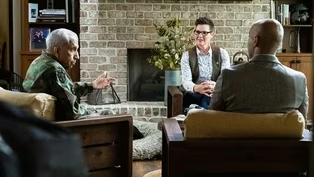
Clip: S4 Ep1 | 2m 48s | Army Veterans share impactful stories of women who served as Army nurses during the Vietnam War. (2m 48s)
 New
Video has Closed Captions
Preview: S4 Ep1 | 30s | Powerful stories from prior seasons explore military service, sacrifice and healing. (30s)
Providing Support for PBS.org
Learn Moreabout PBS online sponsorship











Support for PBS provided by:
Support for this program was provided in part by Kloo and David Vipperman, Barbara Kucharczyk and Robert M. Rainey.